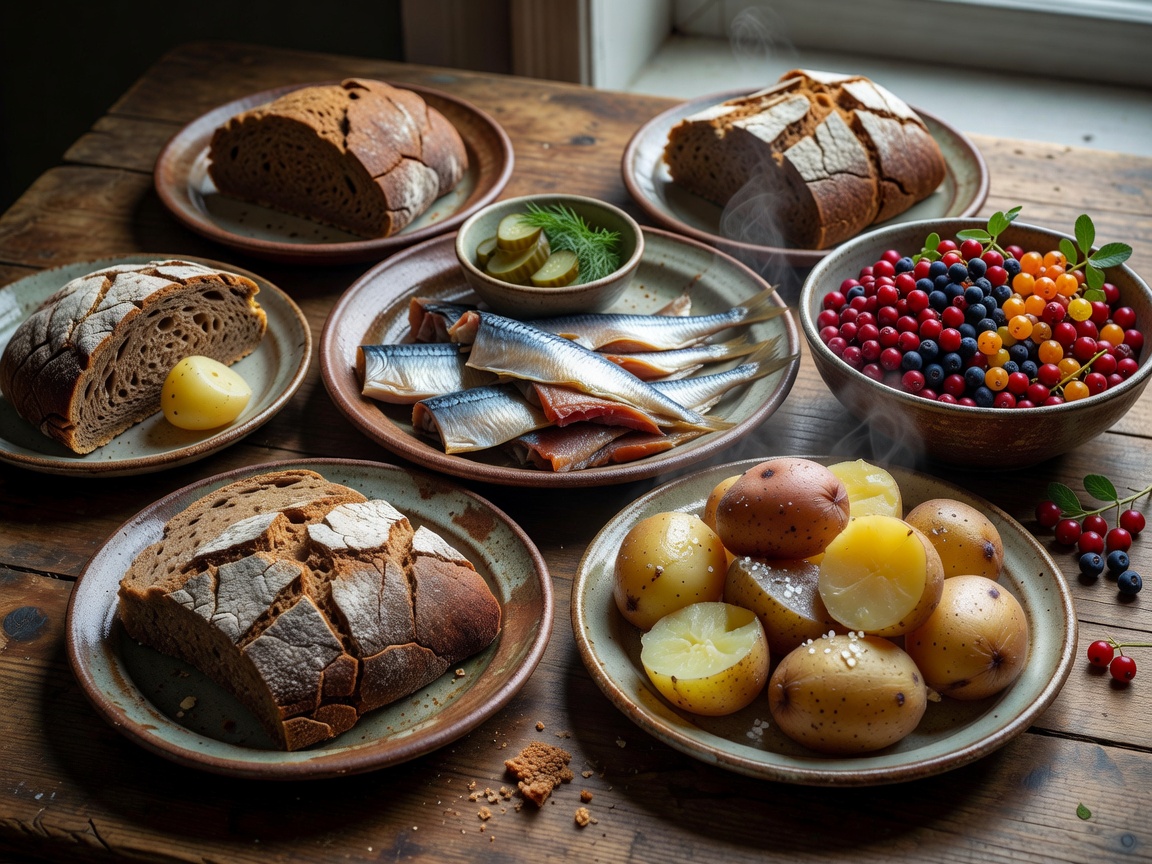
Shared ingredients, different food cultures
Rye, potatoes, dairy, fish, mushrooms and berries appear across the region. Similar ingredients do not mean identical cuisines. Local landscapes, trade, household customs, religious practice, migration and political history have shaped food in different ways. Modern national borders are useful for organising a guide, but they do not perfectly map older food traditions or the movement of recipes and people.
Menus also reflect present-day choices. A restaurant may preserve familiar dishes, reinterpret local produce or draw on a wider European repertoire. Ask what a dish contains and how it is prepared rather than assuming a national label explains every detail.
Latvia: grain, dairy and seasonal variety
Latvian food traditions include rye bread, potatoes, dairy, fish, mushrooms and berries. Rye has a strong place in everyday food culture. Potatoes can appear as a filling accompaniment or as the centre of a dish. Dairy products contribute richness, acidity or texture, depending on the preparation. Fish traditions reflect both coastal and inland settings, while smoked and preserved preparations connect with practical ways to keep food.
Seasonal cooking is important to how the pantry changes through the year. Mushrooms and berries are associated with forest gathering and short harvest windows; cabbage and stored root vegetables become more useful in colder periods. A menu that references Latvian cuisine may emphasise any one of these elements. Look for actual ingredients and preparations instead of relying only on a national name.
Lithuania: potatoes, grains and hearty preparations
Lithuanian cooking is often associated with potatoes, grains, dairy, mushrooms, and smoked or preserved foods. Potatoes take varied forms, including grated, boiled, baked or combined with other ingredients. Grain dishes and breads add another layer to the everyday table. Dairy may be used in both savoury and sweet preparations.
Traditional baked and hearty dishes reflect the importance of sustaining foods and careful preparation. Some recipes require time, shaping or slow cooking; restaurant interpretations can simplify or modernise them. Mushroom and preserved-food traditions connect to seasonal supply and storage. Ask whether a dish is a regional speciality, a contemporary adaptation or a familiar home-style preparation. Those distinctions make menu descriptions more informative.
Estonia: sea, forest and seasonal ingredients
Estonian food draws on rye, fish, dairy, berries, mushrooms and seasonal ingredients. Geography connects inland and coastal foodways, but seafood availability and menu choices vary. Rye bread is a notable staple. Dairy appears in diverse forms, while berries and mushrooms bring seasonal variation. Smoked fish and preserved foods are among the preparations that can link everyday cooking to storage and local resources.
Estonian dining may show Nordic and Baltic influences, particularly in contemporary interpretations of local produce. That description is not a single style or a claim that all Estonian restaurants cook alike. Check the menu’s actual ingredients, course structure and use of seasonal produce. A focused menu can offer a clear sense of place without representing every region or household tradition.
How to compare the three
Use a simple comparison: identify the staple ingredient, preparation method, season and cultural context. Rye bread can be common to all three, but the loaf, serving habit and accompanying foods may differ. Potatoes also travel across borders, yet a Lithuanian potato-centred dish and a Latvian potato side need not play the same role. Fish may be fresh, salted, smoked or otherwise preserved; each method creates a different flavour and texture.
- Ask which ingredients are local or seasonal in the particular dish.
- Notice whether the menu presents home-style tradition or a modern interpretation.
- Compare meal structure, not just ingredient lists.
- Allow for regional, family and historical variation within each country.
Good for
This guide is useful when choosing a first regional meal, comparing menus across a multi-country trip or deciding which ingredients to explore. It also helps avoid treating Baltic food as one fixed national cuisine.
What to know
Regional food is diverse. The descriptions here are broad reference points, not complete inventories. Restaurant menus change, and a country label does not guarantee a particular dish. Verify ingredients and dietary details with the restaurant. For more on the pantry, see the ingredient guide.
Related guides
Compare restaurant formats, plan by food district, or build an itinerary with the dining planner.