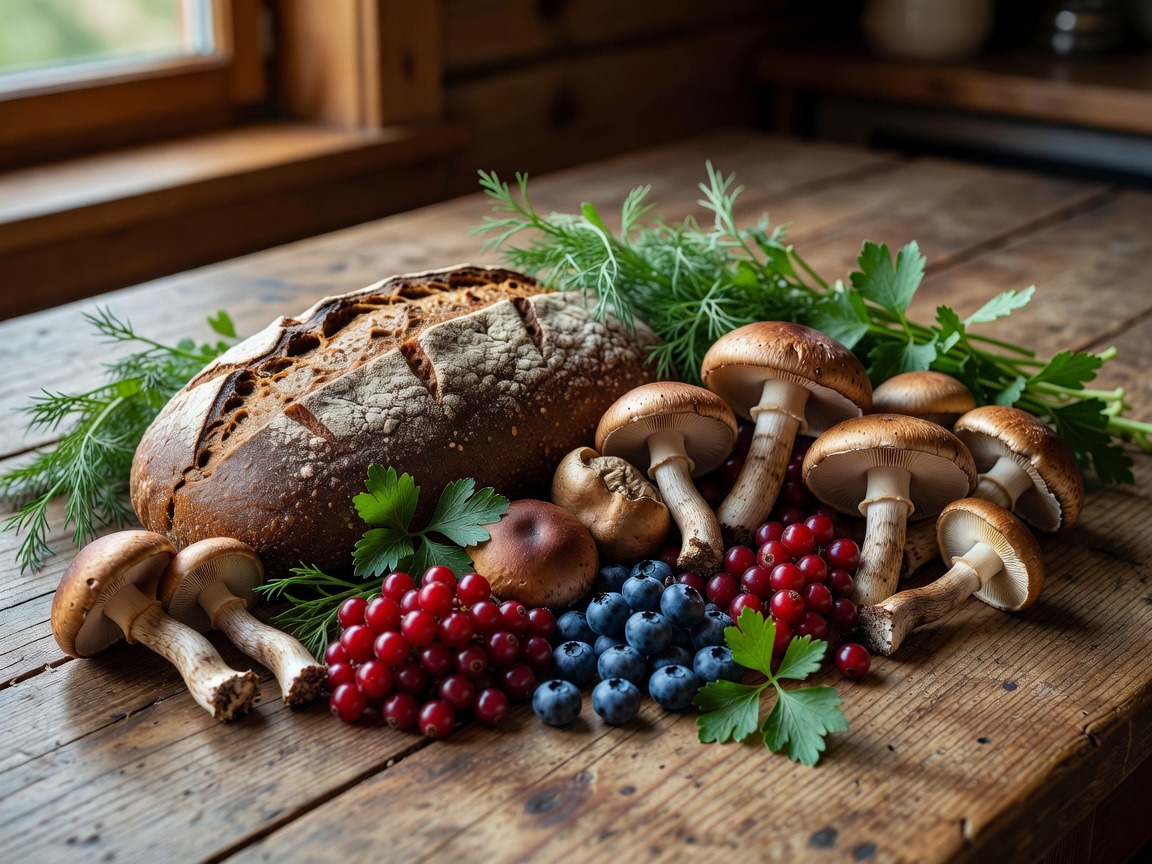
Rye: a defining grain
Rye appears in bread and other baked foods across the region. Its flavour can range from mild to assertive, and loaves vary in density, sourness and texture. It may accompany a meal, form the base of an open sandwich or be served as a substantial side. Rye is stored well compared with many fresh foods, which helps explain its role as a dependable grain. Local baking traditions differ; ask about the loaf rather than assuming all dark bread is the same.
Potatoes and grains
Potatoes are everyday ingredients with many uses: boiled, baked, mashed, grated, filled or combined with dairy and other produce. In Lithuania, potato-centred traditional dishes are especially prominent, though potato cookery is not limited to one country. Grains broaden the table through breads, porridges and side dishes. The preparation gives context: a simple accompaniment serves a different role from a shaped, filled or baked centrepiece.
Fish and dairy
Fish reflects the region’s coastline, rivers, lakes and food preservation practices. Depending on place and menu, fish may be fresh, smoked, salted, cured or cooked in a simple hot preparation. These methods change texture and intensity. Seafood availability is variable, so check the current menu and ask about sourcing or preparation when it matters.
Dairy includes milk products, cultured foods, butter, cream and cheese. It can add richness, acidity or structure to savoury and sweet dishes. Regional products and household use vary. If avoiding dairy, check sauces, baked goods and preparations rather than relying on the dish name alone.
Mushrooms and forest berries
Mushrooms are associated with forest gathering and autumn menus, although preserved mushrooms can appear outside their fresh season. They may be sautéed, added to soups, used in sauces or dried for storage. Types and local customs differ, and restaurant menus should identify the ingredient when relevant. Forest berries bring tartness, colour and seasonal character. They may appear fresh, preserved, cooked into a sauce or used in a dessert. A berry reference does not identify a specific variety or guarantee fresh picking.
Cabbage, onions and herbs
Cabbage is a practical vegetable for fresh, cooked and fermented preparations. It may appear in soups, side dishes or preserved forms. Onions build flavour in stocks, braises and fillings, often working quietly rather than appearing as the named ingredient. Herbs add freshness and can mark a dish’s season or style. Dill is familiar in regional cooking, alongside other garden and woodland herbs. Ingredients and methods differ by cook and country, so read menu descriptions carefully.
Smoked and fermented foods
Smoking and fermentation extend storage and create distinctive flavours. Smoked fish and meat can be served directly, folded into a dish or used as a flavour base. Fermented foods may include vegetables or dairy preparations. Salt, smoke, acidity and time each affect the finished product. Ask how a preparation is made if you need to understand its taste or ingredients. These methods appear in multiple regional traditions, but their use is not uniform.
Seasonality as a menu clue
Season changes what is fresh and what is stored. Spring greens and herbs, summer berries, autumn mushrooms and the winter pantry are useful broad associations, not a promise of a specific dish on a specific date. Weather, suppliers and kitchen choices affect availability. A restaurant’s seasonal menu may change without notice. Check current details directly, especially when planning around a particular ingredient.
- Look for named ingredients and preparation methods.
- Ask whether produce is fresh, preserved or frozen if the distinction matters.
- State allergies and dietary requirements plainly.
- Do not infer local sourcing from a regional dish name alone.
Good for
Use this guide to choose a tasting focus, understand unfamiliar menu terms or compare regional foodways. Pick one ingredient and notice how it changes with preparation: rye as bread, fish smoked or fresh, berries fresh or preserved.
What to know
Ingredient use varies by region, season and individual kitchen. The guide does not verify sourcing or current restaurant menus. Ask the venue about ingredients, allergens and preparation before ordering.
Related guides
Read about regional cuisine, choose a dining format in the restaurant guide, or plan your route with the trip planner.