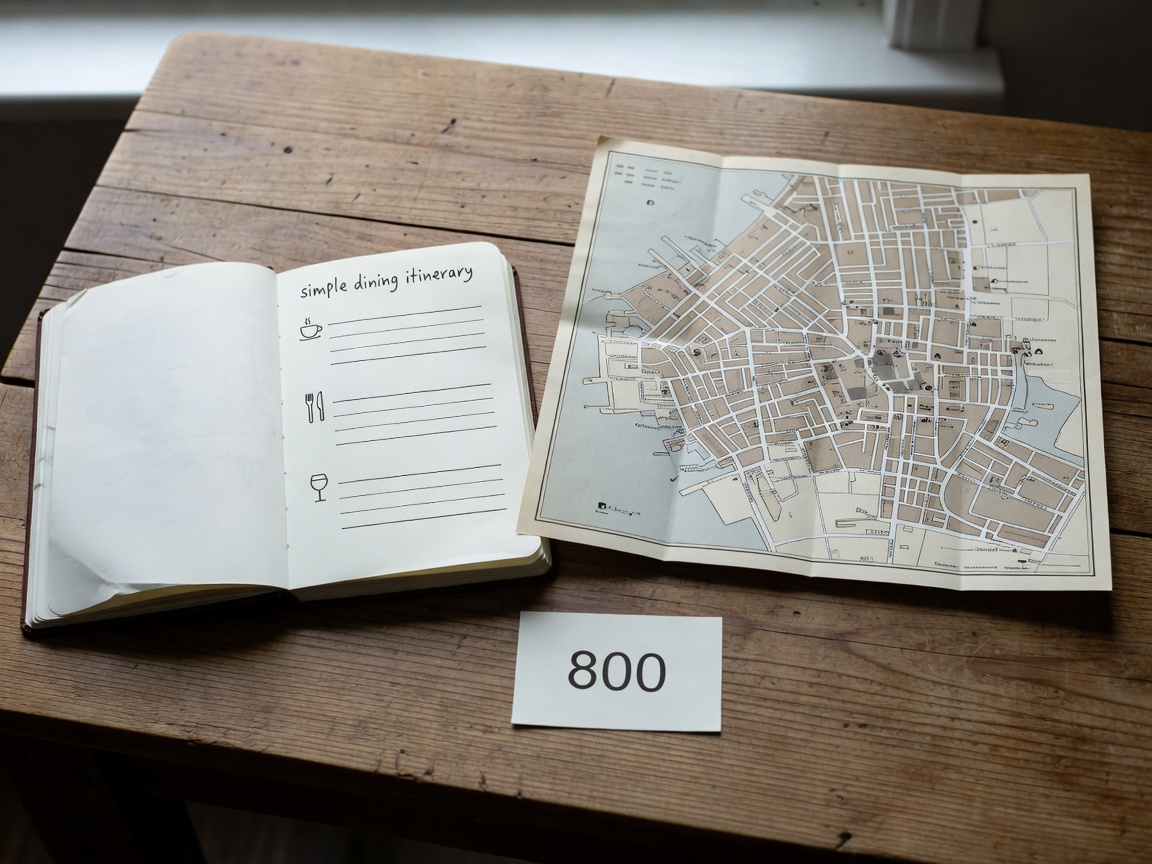
Choose a country, then a city
Latvia, Lithuania and Estonia offer related but distinct food traditions. Choose the country that fits your wider route, language needs, interests and travel time. Then select a city based on practical access and what else you plan to do. Avoid building a schedule around a single venue before confirming the journey and current details. A city with more time allows a slower comparison of cafés, markets and sit-down meals.
For a multi-country trip, give each stop a clear food focus. One city might be for traditional dishes; another might be for market ingredients or contemporary cooking. This makes the experience more legible than trying to sample everything in one day.
Select districts before individual tables
Group restaurants and food stops into a compact area. Historic centres, market zones, waterfront districts and residential neighbourhoods each create different logistics. Use a current map to estimate walking and transit time. Include time for moving between stops, queues where relevant and a full meal. A route that looks short on a map can feel long in poor weather or with luggage.
Research more than one option within the area. Check each venue’s own information for current address, service format and booking guidance. Keep a nearby backup in case a planned visit is not possible. Do not assume a district’s businesses share one schedule.
Match the category to the meal
Choose a restaurant category by occasion. A bakery or café can fit a short morning stop. A market visit may work as an informal tasting or ingredient browse. A traditional restaurant can help introduce regional dishes. A contemporary restaurant may focus on seasonal produce or reinterpretation. Seafood venues and family-oriented places need their own checks, particularly for dietary information and seating.
Plan meal timing around the kind of experience you want. A long, multi-course dinner needs more time than a quick café stop. Check the venue’s stated service times and reservation requirements directly. These details can change; do not build a fixed itinerary on an old listing.
Use season as a guide, not a guarantee
Season can influence ingredients, produce and menu choices. Mushrooms and forest berries are associated with particular harvest periods; stored and preserved ingredients extend beyond their fresh seasons. Weather, local supply and kitchen decisions affect what appears on a menu. Use seasonal references to decide what to ask about, then verify current offerings with the restaurant.
Dietary requirements and menu language
Be precise about dietary requirements. Distinguish an allergy from a preference and name ingredients that must be avoided. Ask whether stocks, sauces, bread or shared equipment could be relevant. Do not rely on a menu icon or translation alone where safety matters. Contact the venue before arrival if the requirement is essential, and confirm again when ordering.
Menus may be presented in more than one language, but translations can vary. Look for ingredient terms and preparation descriptions. Save a written note of dietary requirements, and use a translation tool only as support. The restaurant is the appropriate source for details about its own food.
Budget categories and balanced stops
Plan in broad categories: budget, moderate or higher-cost. These labels help distribute spending without inventing prices. A bakery or market stop may balance a longer restaurant meal, but costs vary by location and choice. Check current menus and payment information before committing to a plan. Include transport and non-food activities in the overall budget.
A balanced food day might include a light morning bakery visit, a market or neighbourhood walk and one planned sit-down meal. Avoid scheduling too many full meals. Leave room for rest, weather changes and cultural attractions. A shorter list often produces a calmer itinerary and more time to notice the food.
Practical planning checklist
- Choose country, city and a realistic daily route.
- Group food stops by district and verify travel time.
- Select meal formats that match pace, budget category and group needs.
- Check current menus, hours, booking and access details with each venue.
- Contact venues about allergies, dietary requirements and group arrangements.
- Keep a nearby alternative and allow time for transit and breaks.
- Pair food stops with a market, museum or walk without overloading the day.
Good for
This method works for a first visit, a multi-city food itinerary, small groups and travellers balancing dining with cultural activities. It is especially useful when several dietary needs or mobility requirements affect the route.
What to know
Restaurant availability, services, menus, prices and opening hours can change. Confirm details close to travel with the venue. This planner offers a framework, not live booking information or a guarantee of service.
Related guides
Start with regional cuisine, compare district types, and choose a format using the restaurant guide.